Adverse yaw is a fundamental aerodynamic effect that every pilot must understand and manage during flight. This phenomenon occurs when an aircraft rolls to one side, and it's crucial for both new and seasoned pilots to master this aspect of flying to ensure smooth, efficient, and safe maneuvers.
What is Adverse Yaw?
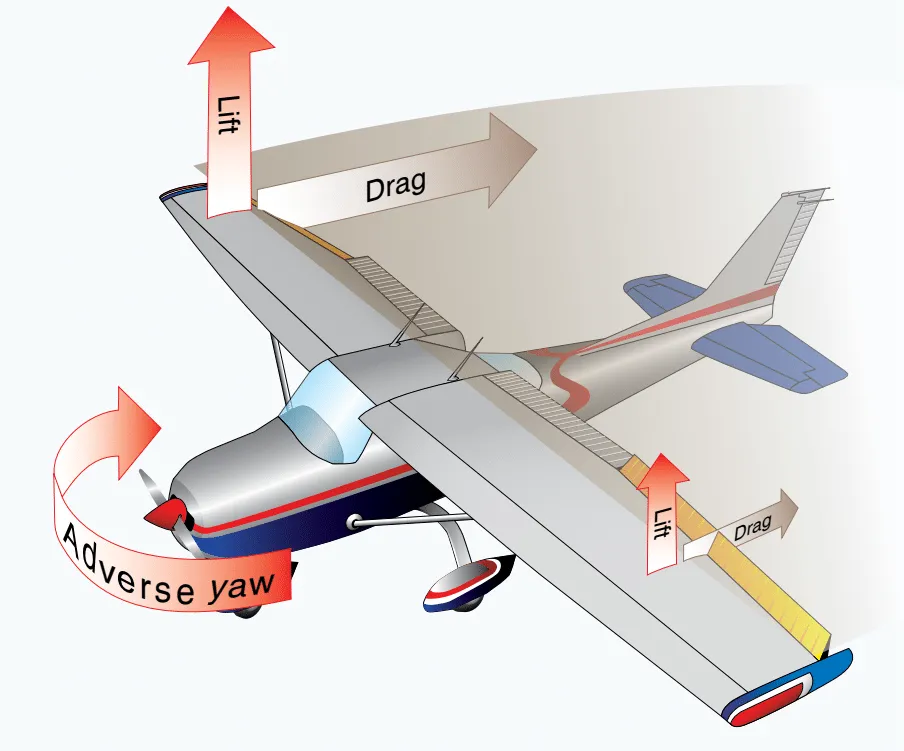
When a pilot attempts to roll the aircraft, they use the ailerons to lift one wing and lower the other. The aileron raised decreases the wing's lift and reduces its drag, while the aileron lowered increases lift and, consequently, its induced drag. This imbalance in drag causes the aircraft to yaw — or turn slightly — in the direction opposite to the roll. For instance, if you roll to the right, the aircraft will initially yaw to the left.
This effect is most noticeable in light aircraft and at lower speeds where aileron inputs are more pronounced, and the resulting drag differential has a more significant impact on the aircraft’s yaw.
Managing Adverse Yaw
To counteract adverse yaw, pilots use the rudder. By applying rudder input in the same direction as the roll, a pilot can align the aircraft’s nose with its flight path, maintaining a coordinated turn. This technique is essential for ensuring the aircraft's stability and is a critical skill developed early in flight training.
Importance of Understanding Adverse Yaw
Understanding and managing adverse yaw is crucial for:
- Safety: Proper management of adverse yaw reduces the risk of uncoordinated maneuvers, which can lead to increased stall risk or even spins.
- Efficiency: Coordinated turns minimize the extra drag and loss of lift associated with uncoordinated flight, leading to more efficient flight paths and fuel usage.
- Comfort: Smooth, coordinated turns enhance comfort for both pilots and passengers by reducing unexpected forces and motions inside the aircraft.
Learn More
For those interested in deepening their understanding of adverse yaw and its implications in flying, several resources are available:
- BoldMethod’s Guide on Adverse Yaw: A comprehensive explanation tailored to new pilots.
- CFI Notebook on Aircraft Stability: A detailed resource for more advanced readers looking for technical insights.
At Pilot Rise Flight School, we incorporate thorough training on adverse yaw in our curriculum, ensuring our students are well-equipped to handle this and other aerodynamic effects. Mastery of these concepts is not only crucial for passing checkrides but also for the safety and enjoyment of flying.