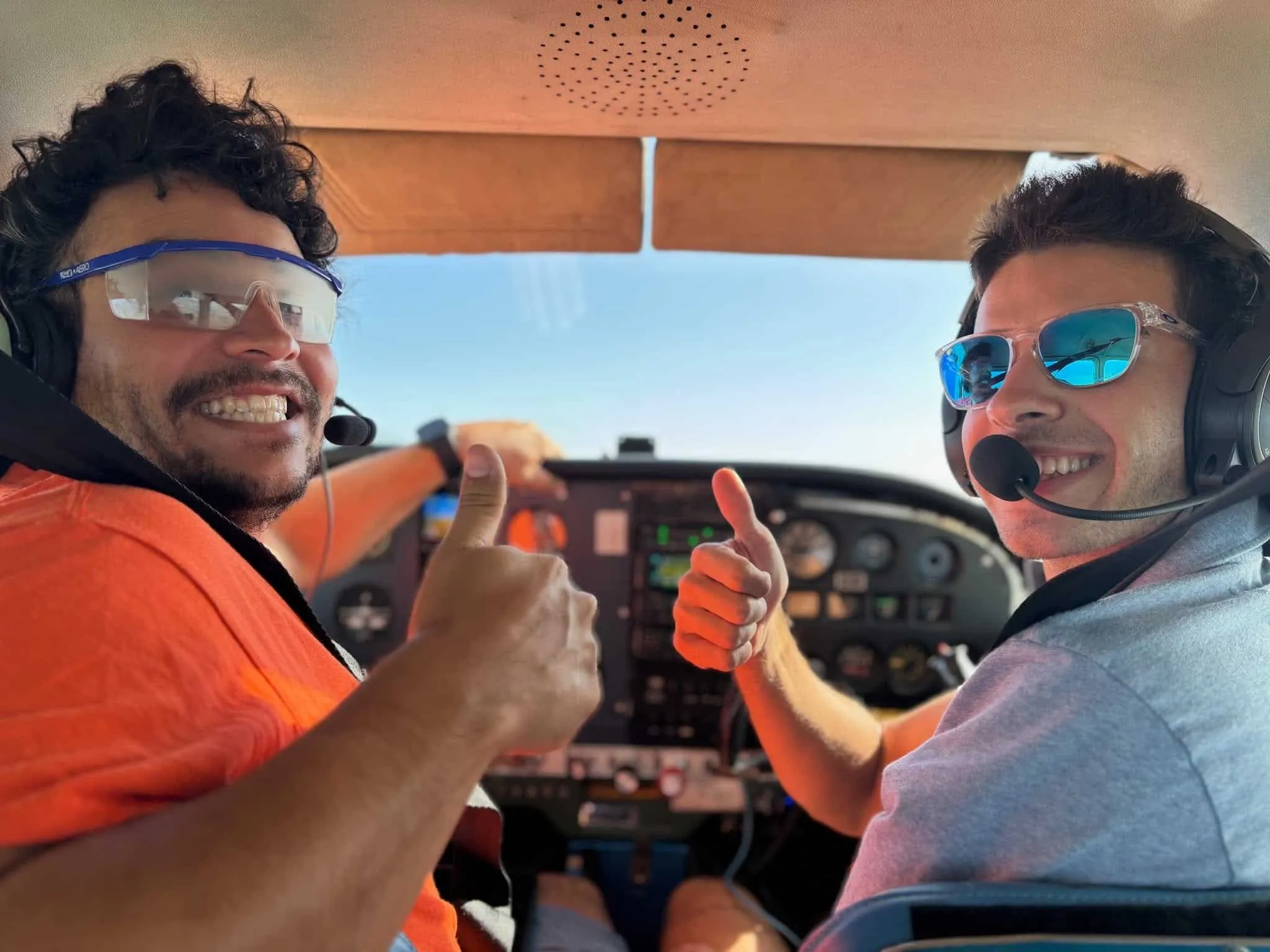
Summary
- You can become a pilot while working full time if you train consistently and stay connected to aviation between flights.
- Part-time flight training works best when you reserve multiple lesson opportunities, study briefly each day, and prepare before every flight.
- A flexible Part 61 school can help you train around work while still keeping the program structured.
Yes, you can become a pilot while working full time.
Many student pilots complete their training on weekends, before or after work, or on rotating days off. You may progress more slowly than someone training five days per week, but a full-time job does not prevent you from becoming a pilot.
The key is not having unlimited free time. It is using the time you have consistently.
Choose a Flight School With Flexible Scheduling
Part-time flight training works best when your school can build lessons around your actual availability.
Some students train every Saturday and Sunday. Others fly before work, after work, or on weekdays when their schedules allow. At Pilot Rise, our structured Part 61 training provides the flexibility to train around work without turning your program into a disorganized free-for-all.
Try to reserve more than one lesson opportunity each week when possible. Weather, maintenance, and scheduling conflicts are normal parts of flight training. Reserving two opportunities gives you a better chance of completing at least one productive lesson.
You can compare flexible, accelerated, and budget-conscious options in our guide to the three flight training paths.
Stay Connected to Aviation Between Lessons
The biggest problem with weekend-only flight training is not the schedule itself. It is mentally disconnecting from aviation for the other five or six days.
If you fly on Saturday and do not think about aviation again until the following Saturday, part of each lesson may be spent recovering knowledge and skills you previously learned.
A better approach is to study for at least 15 minutes each day.
That could include:
- Watching part of an online ground school lesson
- Reviewing flashcards
- Practicing radio calls
- Chair flying a maneuver or procedure
- Reviewing notes from your last lesson
- Preparing questions for your instructor
- Studying the plan for your next flight
Fifteen focused minutes per day is often more sustainable and effective than trying to complete several hours of studying all at once.
For a deeper explanation of retrieval practice, chair flying, memory, scenario-based training, and other effective techniques, read our guide on how to learn as a pilot.
Create Your Own Flashcards
Watching ground school videos is useful, but watching alone can become passive. One way to improve retention is to create your own flashcards as you progress through the course.
The act of deciding what belongs on each card forces you to process the information. You then have a personalized study deck covering the subjects you are currently learning.
Once the cards are created, use small amounts of downtime throughout the day:
- Review 10 cards before walking into work
- Review 10 during lunch
- Review another 10 in the evening
Instead of automatically opening short-form videos or social media, complete a few flashcards first. Those small sessions add up quickly and keep aviation knowledge fresh between flight lessons.
Make Flight Training Enjoyable
Flight training requires serious study, but every lesson does not need to feel like another work assignment.
Whenever it fits the training objective, incorporate places and experiences that interest you. Plan a cross-country flight to an airport restaurant. Fly to a destination you hope to visit after earning your certificate. Practice navigation, weather planning, radio communication, and decision-making while completing a flight that feels meaningful.
This is one reason Pilot Rise places a strong emphasis on scenario-based training. Instead of treating every maneuver as an isolated task, we connect skills to realistic flights, destinations, and decisions.
You are still completing the required training, but you are also experiencing what becoming a pilot will allow you to do.
Use Your Commute Carefully
A driving commute can become useful study time when everything is handled safely and hands-free.
You might listen to ground school lessons, practice explaining aviation concepts aloud, or have an AI tool quiz you through voice conversation.
AI can be useful, but it should not replace your instructor, FAA publications, or trusted training materials. Stay close to subjects you already understand. Going one or two steps beyond your current knowledge can be productive. Going much further makes it difficult to recognize when an AI response is incomplete or incorrect.
Write down anything uncertain and verify it later with your instructor or a reliable primary source such as the FAA aviation handbooks and manuals.
Become Part of the Aviation Community
Flight training becomes easier to maintain when aviation is part of your life rather than something you only do during scheduled lessons.
Connect with other students at your flight school. Join reputable aviation groups online. Attend local aviation events. Talk with pilots who have already completed the stage of training you are working through.
Other students can help you stay motivated, recommend study methods, share experiences, and remind you that struggling with a subject or maneuver is a normal part of learning.
At Pilot Rise, students are also encouraged to learn from one another and, when appropriate, participate in observation flights. Watching another student work through a lesson can reinforce procedures, radio communication, decision-making, and instructor feedback without paying for another flight hour.
A Realistic Part-Time Training Routine
A working student's schedule might look like this:
During the week: Complete at least 15 minutes of study each day, review your last lesson, and prepare for the next one.
Before each flight: Review the lesson objective, chair fly important procedures, and arrive with questions.
On days off: Schedule one or two flight opportunities, depending on your availability and budget. See the current total pilot training costs.
After each lesson: Write down what went well, what needs improvement, and exactly what you should study before returning.
This keeps your training moving even when you are not physically in the airplane.
Can I Become a Pilot While Working Full Time as a Career Student?
You can complete your private pilot certificate, instrument rating, and portions of your commercial training while continuing to work full time.
A career-focused student may eventually decide to reduce work hours or transition into more frequent training, particularly when building flight time or preparing to work as a flight instructor. However, you do not necessarily need to quit your job before taking the first step.
Starting with private pilot training allows you to experience the training process, build foundational skills, and make a more informed decision about how aggressively you want to pursue aviation as a career.
Consistency Matters More Than a Perfect Schedule
You do not need to put the rest of your life on hold to become a pilot.
You need a realistic training schedule, regular contact with the material, effective study habits, and a school that can provide both structure and flexibility.
Fly when your schedule allows. Study a little every day. Make the training meaningful. Stay connected to the aviation community. Most importantly, do not treat the days between flights as days when your training stops.
Pilot Rise provides structured, flexible flight training at Dallas Executive Airport and Hicks Airfield in Fort Worth. Schedule a discovery flight to experience the training process and discuss a plan that fits around your work schedule.