Aircraft cabin pressurization is crucial for ensuring the comfort and safety of passengers and crew during flight. This process is managed by sophisticated systems known as Pneumatic Air Cycle Kits (PACKs), which regulate cabin air temperature and pressure through a series of intricate steps. Here’s how these systems work to maintain a pleasant and safe environment aboard an aircraft.
How PACKs Work
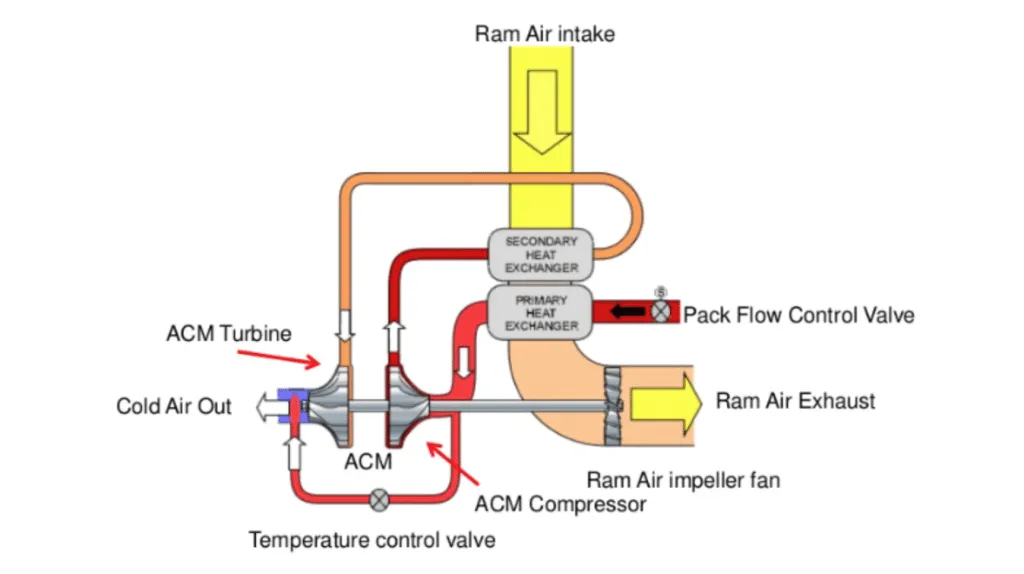
PACKs utilize a reverse Brayton cycle to effectively remove heat from the air, starting with hot, compressed air sourced from the aircraft's engines. This bleed air undergoes a rigorous cooling process essential for cabin comfort. Initially, it is directed through a primary heat exchanger, where it is substantially cooled. Following this initial cooling, the air enters the PACK system, where it is compressed further, elevating its temperature slightly—a step that paradoxically enhances the cooling efficiency in subsequent stages.
Enhancing Cooling Efficiency
The compressed air is then cooled again in a secondary heat exchanger. To assist in the cooling process, ram air—air drawn from outside the aircraft—is used. The ram air is typically taken in from inlets located underneath the fuselage, which helps maximize the cooling effects as the aircraft moves forward. The system also recycles water extracted from the cooled air, spraying it back into the ram air stream. This method leverages the cooling properties of evaporation, significantly enhancing the overall efficiency of the heat exchangers.
The Role of the Impeller Fan
In situations where the aircraft’s speed is insufficient to provide enough ram air for effective cooling, such as during taxiing or low-speed flight, an impeller fan within the PACKs kicks in to maintain airflow. This fan's speed can be independently controlled by a Turbofan Control Valve, ensuring that the cooling process is consistent and independent of the aircraft's airspeed.
Maintaining Cabin Environment
Once the air has been cooled to the desired temperature, it is released into the cabin, mixing with the existing air to create a stable and comfortable atmosphere. This process involves careful balancing of the fresh, cool air with the warmer air already present, controlled through a series of valves that manage air flow and pressure within the cabin.
Safety and Pressure Regulation
The aircraft’s cabin pressure is carefully regulated through an outflow valve that adjusts the amount of air exiting the cabin to balance with the newly cooled air entering it. This regulation helps simulate conditions found at lower altitudes, making high-altitude travel more comfortable. Additionally, safety valves are in place to protect against overpressurization, automatically activating if the cabin pressure exceeds or drops below set safety thresholds.
The technology behind PACKs is a perfect example of how advanced engineering and understanding of thermodynamics are applied in aviation to enhance the safety and comfort of air travel. Through these systems, aircraft can maintain an environment that feels as natural as being on the ground, even when flying high in the sky.