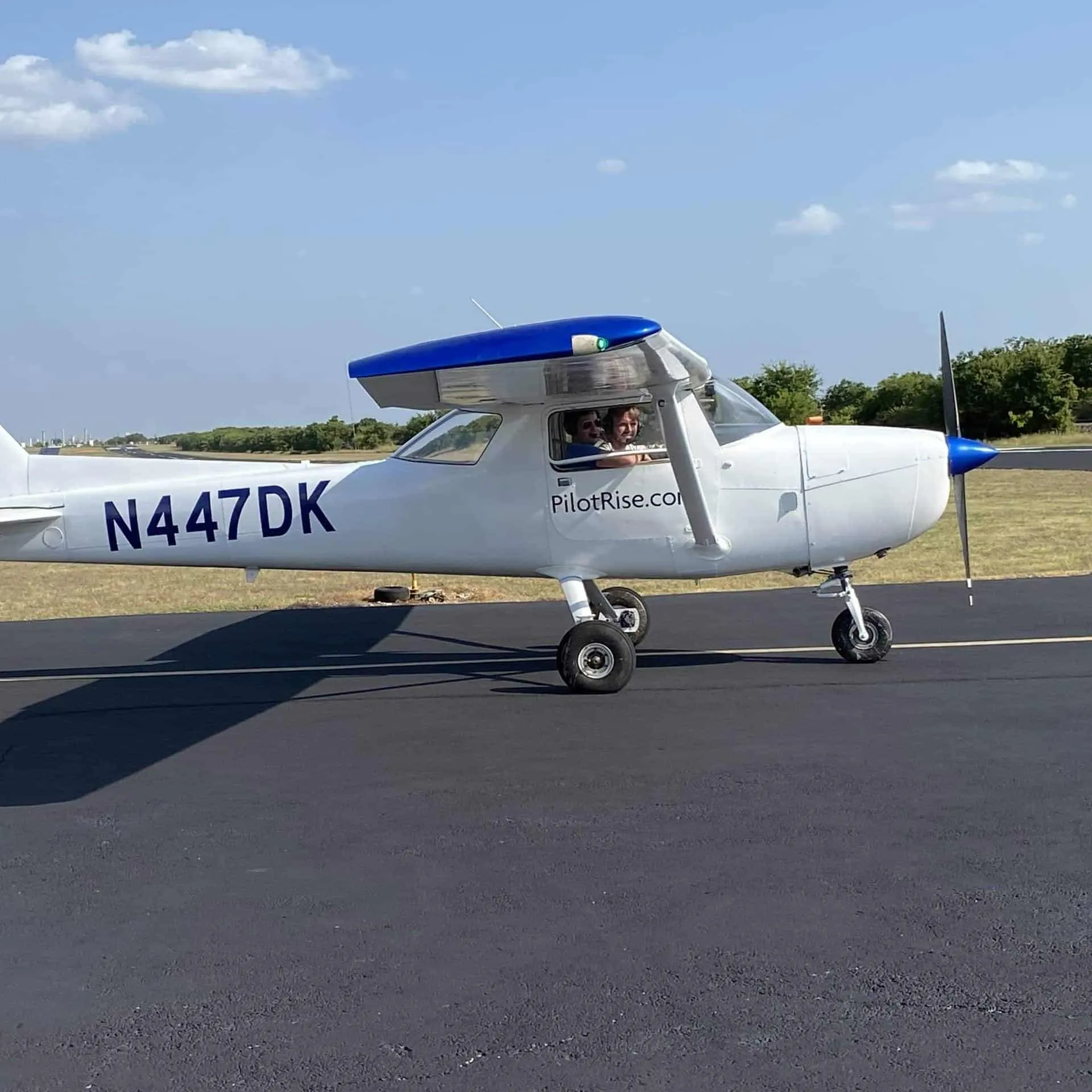
What to Expect From Your First Discovery Flight and Private Pilot Training
Starting flight training is exciting, but it comes with important questions. What should you bring to your first flight? How long does it actually take to earn a Private Pilot Certificate? And how does Pilot Rise Flight School approach training differently?
This overview gives you clear, realistic expectations from day one.
What to Bring to Your First Discovery Flight
A discovery flight is a relaxed, hands-on introduction to flying with a certified flight instructor. No prior experience is required.
Bring:
- A valid government-issued photo ID
- Comfortable, weather-appropriate clothing
- Closed-toe shoes suitable for rudder pedals
- Sunglasses (non-polarized preferred)
You do not need:
- A headset or pilot supplies
- Any aviation knowledge
- A medical certificate
Your instructor will explain everything step by step, and most students will have the opportunity to fly the airplane with guidance.
How Long It Really Takes to Earn a Private Pilot Certificate
The FAA minimum is 40 flight hours, but that number rarely reflects real-world training. Most students finish between 60 and 75 flight hours.
Your timeline depends largely on whether you are training as a hobby pilot or on a career track.
Realistic Timeline for Hobby Pilots
Hobby pilots often balance flying with work, family, and other commitments. Training tends to be slower but steady.
Typical schedule: 1 to 2 flights per week
Realistic timeline:
- 12 to 18 months to complete training
- Sometimes longer if there are extended breaks
This pace is completely normal. The key challenge is consistency. Long gaps between lessons often require relearning skills, which increases both time and cost.
Hobby pilots benefit most from structured lessons and clear progress tracking to stay motivated and efficient.
Realistic Timeline for Career-Track Students
Career-track students usually prioritize flying and treat training like a part-time or full-time commitment.
Typical schedule: 3 or more flights per week
Realistic timeline:
- 6 to 9 months for Private Pilot Certificate
- Occasionally faster with ideal weather and availability
This pace allows skills to build quickly, reduces repetition, and keeps momentum high. Career-track students typically move directly into instrument training shortly after earning their private certificate.
What Impacts Training Time the Most
Regardless of goals, the biggest factors that affect how long training takes include:
- Consistency and lesson frequency
- Weather and seasonal conditions
- Study habits outside the airplane
- Instructor and aircraft availability
- Overall training efficiency
Flying more consistently almost always leads to better retention and lower total cost.
How Pilot Rise Trains Pilots Differently
Pilot Rise focuses on developing safe, confident pilots who are prepared for real-world flying, not just passing a checkride.
Our training approach emphasizes:
- Task-based training focused on mastery, not rushing lessons
- Real-world decision-making from early in training
- Flexible lesson structure to stay productive when conditions change
- Strong safety and professionalism standards from the first flight
This approach benefits both hobby and career-track students by reducing wasted time and reinforcing long-term proficiency.
Ready to Take the First Step?
A discovery flight is the best way to experience flying firsthand and see how training fits your goals and schedule. It provides clarity, confidence, and a realistic picture of what training looks like at Pilot Rise.