Hicks Airfield - Traffic Pattern Entry & Exit Procedures (T67)

Book Flight817-755-5652
Beyond FAA MinimumsPersonalized TrainingFlexible SchedulingFinancing Available
Beyond FAA MinimumsPersonalized Training
Flexible SchedulingFinancing Available

Guidance by the Hicks Airport Safety Committee (With modifications)

To enhance safety and consistency at Hicks, the following pattern procedures are in effect. Pilot Rise has made a small modification—departing aircraft should climb after leaving the pattern, as altitude gives more options. Use caution for high-speed military traffic arriving and departing from the nearby Joint Reserve Base.

Runway 14

Arrivals:
Fly north of the powerlines (over the high school), then enter a 45° to the right downwind. Do not descend in the pattern.

Departures:
After crosswind, climb and remain just south of the powerlines.
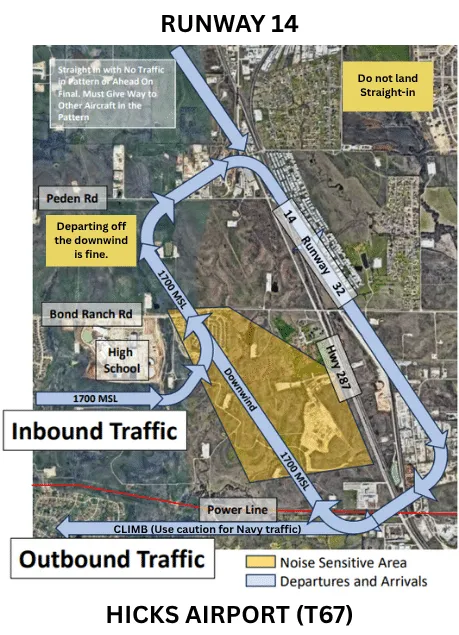
Hicks Airfield - Traffic Pattern Entry & Exit Procedures (T67)

Runway 32

Arrivals:
Fly south of Peden Road and enter a 45° to the downwind.

Departures:
Depart straight out or turn crosswind as appropriate. Remain north of Peden Road.
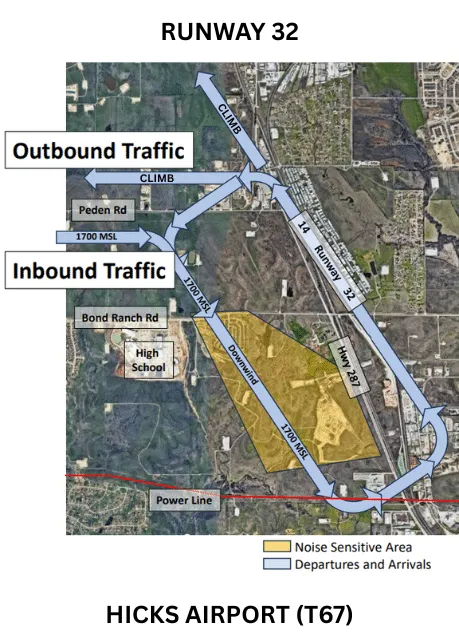
Hicks Airfield - Traffic Pattern Entry & Exit Procedures (T67)

Pattern Safety Reminders

  • Keep the pattern tight enough to always make the runway if the engine fails.

  • Do not practice landings at night at Hicks—use an airport with at least 7,500 ft of runway.

  • Stay alert and watch for traffic.

  • Begin your crosswind turn within 300 ft of pattern altitude (1,400 MSL).


Fly smart. Fly precise. Keep Hicks safe for everyone.
Related Reading

Flight TrainingMastering Airport Pattern Entry and Exit Techniques

Airport pattern entry and exit techniques are fundamental skills every pilot must master to ensure safe and efficient operations in the airspace around airports. Whether you are a student pilot learning the ropes or an experienced aviator refreshing your knowledge, understanding the proper procedures for entering and exiting the traffic pattern is crucial for maintaining situational awareness and avoiding conflicts with other aircraft. In this article, we will delve into the guidelines provided by the Aircraft Owners and Pilots Association (AOPA) and the Federal Aviation Administration (FAA) to help pilots navigate these critical aspects of flight.

March 1, 2024
Flight TrainingCan I Become a Pilot While Working Full Time?

Yes, you can become a pilot while working full time. Learn how to schedule flight lessons, study efficiently, and keep making progress between flights.

July 30, 2026
Flight TrainingFlight Time Building: How to Reach 250 Hours Without Wasting Money

Learn how to build flight time efficiently for the instrument rating and commercial pilot certificate, including cross-country PIC strategy, safety pilot logging, and cost-sharing.

July 28, 2026

Discovery Flight

Ready to Fly?

Take a 30-minute discovery flight, get hands-on time at the controls, meet an instructor, and see whether Pilot Rise is the right fit for your training. The flight is $150, or free with approved financing through one of our partners.

Contact Us
Contact Us security verification

By submitting, you agree to receive reservation and update texts from Pilot Rise. Msg & data rates may apply. Reply STOP to opt out. See our Privacy Policy. No spam. We will never sell your information.

Book Flight

SCHEDULE INTRO FLIGHT - $150

Hands-on 30-minute intro flight. Discover what flying is like.

Book online — No card required.

Book flight security verification

By submitting, you agree to receive reservation and update texts from Pilot Rise. Msg & data rates may apply. Reply STOP to opt out. See our Privacy Policy. We will not send marketing texts.

Select Aircraft

Free Flight Training Guide

Step 1 of 333%

What's your first name?